
Tips for analyzing OCDS, sanctioned companies, questionable tech contracts, and a new dataset: Our latest newsletter
This month: Sanctioned companies, questionable tech contracts, tips for analyzing OCDS, and a new dataset from Bangkok

Welcome back to our newsletter, covering stories about the use and abuse of public contracts and providing tips and insights on how to investigate public procurement. Are you investigating a public contract right now? Get in touch – we’d love to help.
[What we’re keeping an eye on]
A number of high-stakes public contracting stories have hit the headlines in recent months – from Spain’s “Koldo case” investigation into a kickback scheme for Covid-19 medical supplies, to Hungarian oligarchs feeding on government contracts, to the contractors reshaping Washington, D.C. Many of these are ongoing investigations, so let’s look at some of the more specific reporting we’ve been following.
Armenia: A Guardian investigation by Rob Davies raises questions about a British company’s contract for exporting high-tech machinery to Armenia. The report surfaced several red flags raised in Martin Vladimirov and Tihomira Kostova’s Shadow Economies paper: dual-use goods, a high-risk jurisdiction for re-export to Russia, and a buyer tied to a sanctioned Russian company.
Biometric tech in Africa: GIJN’s Rowan Philp highlights tips for investigating contracts for biometric technology in Africa, such as facial recognition and biometric voter registration systems, iris scanners and digital ID cards. The advice from seasoned investigators includes regularly monitoring industry developments, finding ex-employees on LinkedIn, and using export trade databases. Check out the article for more.
Sri Lanka: In a powerful example of strategic litigation, TI Sri Lanka secured a landmark Supreme Court ruling against an irregular medical procurement process. The Court held a former health minister and other senior officials accountable for violating the fundamental rights of the people of Sri Lanka in a drug procurement deal that caused serious harm to the public. The Court ordered significant payments to the State, and directed the Commission to Investigate Allegations of Bribery or Corruption to take steps under the Anti-Corruption Act.
From Tashkent to Kent, UK: This investigation by Thomas Rowley and Simon Bowers for Finance Uncovered and OCCRP, reveals how an Uzbek state-owned mining company awarded more than $200 million in contracts to a network of secretive foreign firms lacking relevant experience – businesses run on paper by a 71-year-old horse-loving grandmother from Kent.
[Data insights]
Fancy some data insights from one of South-East Asia’s largest cities? Bangkok now publishes standardized open contracting data, updated weekly. Download the data here and explore the detailed dashboard.
Malta: Amphora Media’s Daiva Repečkaitė, Sabrina Zammit, Evy Coeckelbergs and Julian Bonnici investigate how direct awards – intended for genuine emergencies – have become routine in Malta. Using a large language model developed with NotebookLM, the reporters analyzed direct awards and tenders published in the government gazette issued between 2010 and 2025.
Mexico: Congratulations to all this year’s Sigma Awards winners! Don’t miss QuintoLab’s winning entry analyzing contracts awarded to ghost firms in Mexico across the last four presidential terms.

Spain: The official gazette of Spain’s business registry (BORME) publishes thousands of company records every day: incorporations, changes of directors, capital increases, and dissolutions. As often happens with official gazettes, the information is public but not easily accessible. OpenMercantil is an independent public data project that makes the information more user-friendly and adds data on public contracts, grants, sanctions and more. Get the sources and documentation.
[Tips from practitioners]
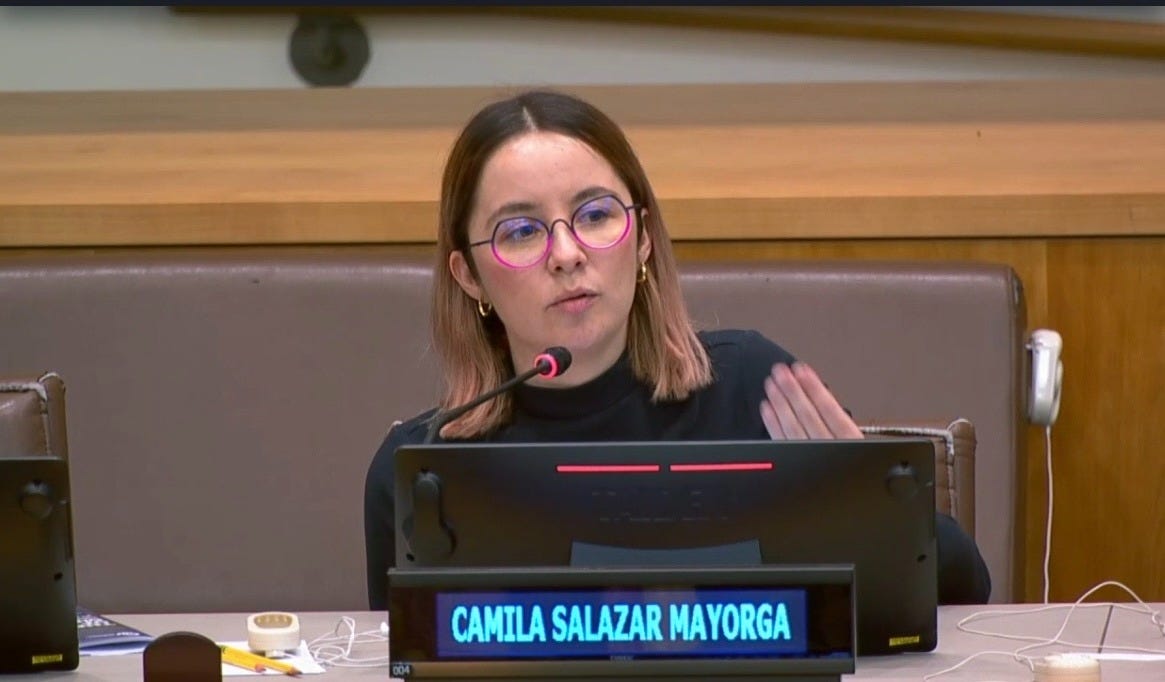
One year in, the UK’s public procurement reform is showing results. But what’s most exciting for us is that there is finally a single source of truth, published in the Open Contracting Data Standard, that we can analyze, parse, question and flag room for improvement.
Our Head of Data Analytics and Learning, Camila Salazar, brings experience as an investigative data journalist at La Nación in Costa Rica. Here she shares some tips on how to analyze the UK data for yourself, or explore other countries’ open contracting datasets (see our Data Registry for more).
Understand your context first. Before starting any analysis, make sure you understand how the procurement process works, including how opportunities are announced and the types of procedures used, such as direct awards, open procedures, framework agreements, etc. Each procedure can have different rules, transparency requirements, data fields and filtering logic.
For example, the UK introduces a new regime of notices to announce contracting opportunities and the fields available for open procedures might differ significantly from those relevant to direct awards. Mixing them could skew your results, and multiple notices can relate to the same underlying contract, so be careful about aggregating notices without accounting for this. For a detailed guide to how the UK OCDS data is structured, see our blog.Check for data quality issues. The first step in any analysis should be assessing your data to spot quality issues that could affect your findings.
For UK data specifically, pay attention to the identifiers used and their scheme (is it from Companies House, the NHS or undeclared?), as different schemes appear in the dataset, and for below-threshold contracts, supplier identifier coverage is low. For each issue you find, decide whether it can be addressed through cleaning or filtering, or whether it is a structural limitation of the data (such as missing identifiers for specific procedure types) that should be flagged as a limitation in your analysis rather than treated as something to fix.Dig into the details behind your data findings. Patterns in the data might point to an interesting story, but the real insight usually comes from examining concrete examples.
For instance, if you find a large number of high-value direct awards, look closer: who are the suppliers, who is the procuring entity, what is the purpose of those contracts, and does the justification hold up? When something looks anomalous, you can look for specific contract documents and cross-reference with other external sources such as Companies House or relevant regulations, or speak to insiders and subject-matter experts who can help verify your assumptions. That deeper work is usually what turns a finding into a meaningful story.
For detailed instructions to set up your analysis, check out our full blog post on the UK data and our resource on OCDS data more generally.
[Data tools & resources]
Investigating sanctioned and debarred companies: Here’s a run-down of useful resources. The Global Suspension & Debarment Directory, maintained by the World Bank, lists companies excluded from doing business with the governments of 36 jurisdictions. OpenSanctions is an open-source database of sanctions, watchlists, and politically exposed persons. This insightful post reflects on the use and value of LLMs in the screening process (as of May 2026). If you’re just looking at Mexico, Ojo a las Sanciones will come in handy.
Opportunity: Journalists interested in analyzing digital public infrastructure in Latin America – including how it’s financed – can apply for a course and investigative grants run by Derechos Digitales and El Clip. Apply here by 29 May 2026.
This newsletter has been put together by Georg Neumann at Open Contracting Partnership with editing by Sophie Brown. Thanks for reading. Do give us a like if you’ve enjoyed the read. Did a friend forward you this email?